
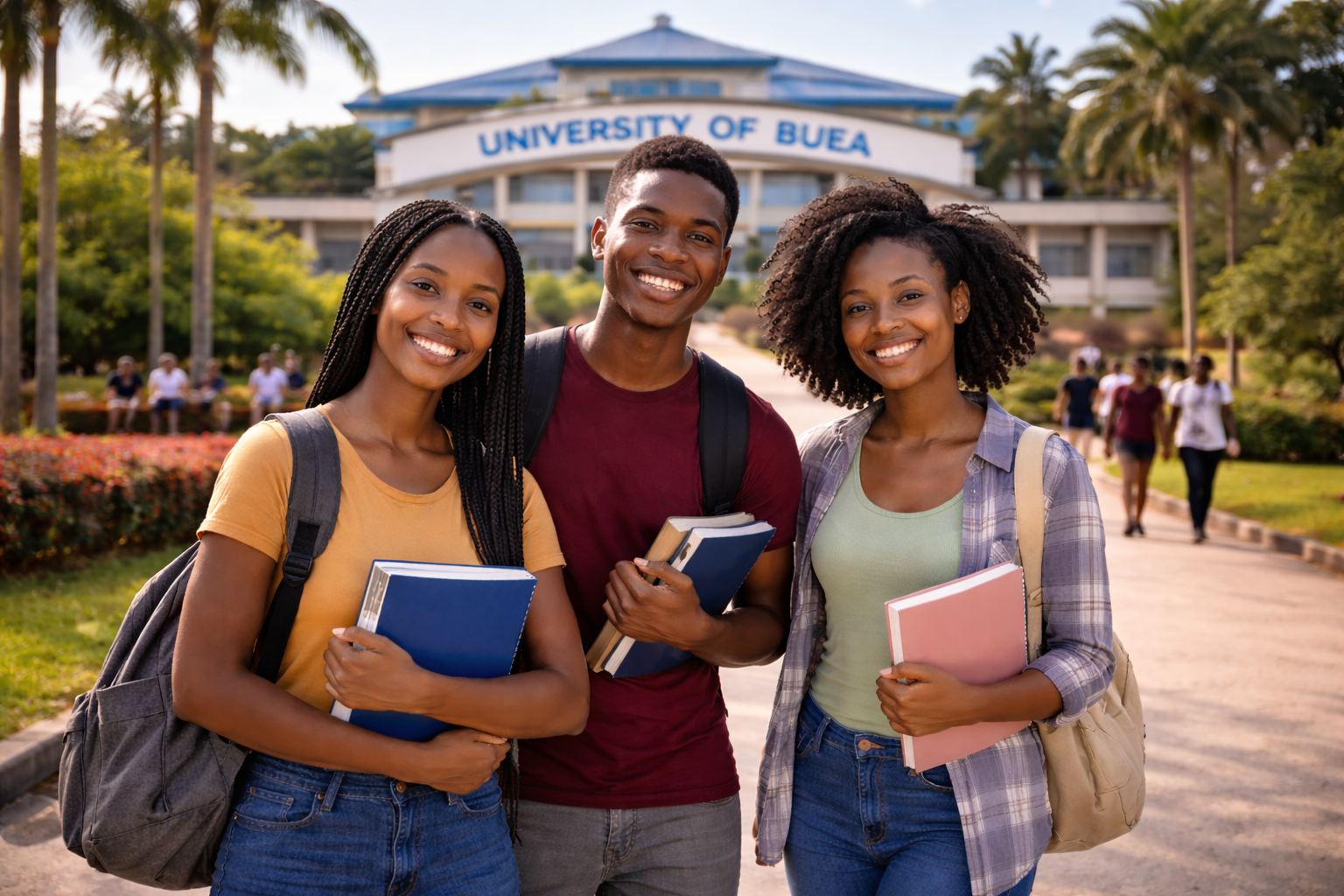
Introduction: Our University, Our Question
The University of Buea was not created by accident. It was born out of history, struggle, and a clear political understanding. It was established as an Anglo-Saxon university, deliberately designed to serve the educational needs of the people of the former British Southern Cameroons—today known as Ambazonia.
For decades, our people demanded an institution that would reflect our educational heritage, our language, and our identity within a so-called bilingual state. When the University of Buea was finally created in 1993, it was welcomed as a long-overdue acknowledgment of that demand.
Yet today, we are compelled to ask a painful and unavoidable question:
How did an Anglo-Saxon university, created for our people, become a space where English-speaking indigene are denied admission, while French-educated applicants and professors increasingly dominate?
This article speaks from our lived experience as Ambazonians. It is not written in hostility, but in truth. It is not written to divide, but to expose an injustice that must be addressed if peace, reconciliation, and coexistence between the two Cameroons are ever to be meaningful.
1. Our Historical Foundation Was Clear
The former British Southern Cameroons developed under British administration with an Anglo-Saxon system of education, law, and governance. English was not merely a subject; it was the language of instruction, thought, and intellectual formation.
When reunification occurred in 1961, it was on the basis that two distinct peoples with two distinct systems would coexist in mutual respect. Education was one of the pillars of that agreement.
For decades, however, our educational system was steadily eroded. Francophone institutions expanded into our territory, while our Anglo-Saxon heritage was treated as secondary or optional. The creation of the University of Buea was therefore not a gift—it was a partial restoration of what had been lost.
Its mandate was unambiguous:
To operate primarily in English
To reflect Anglo-Saxon academic traditions
To serve the English-speaking population of the former British Southern Cameroons
Any deviation from this mandate is not neutral; it is political.
2. English Is Our Educational Reality, Not a Technical Obstacle
One of the greatest injustices confronting Ambazonian students today is the way English has been weaponized against them.
Our children are taught in English from pre-nursery through secondary school. They write their examinations in English. They study mathematics, science, history, and literature in English. English is not a foreign language to us—it is the medium through which we think, learn, and reason.
Yet we now see a situation where an Ambazonian student who has completed their entire education in English is denied admission into the University of Buea because of failure in a single subject called English.
At the same time, students educated entirely in French—whose intellectual formation has occurred in a Francophone environment—are admitted after meeting alternative criteria.
We must ask, plainly and without fear:
How does English suddenly become a barrier for those who live in it, while French-educated students are deemed more qualified to study in English?
This is not logic. This is exclusion disguised as policy.
3. The Question of Professors and Institutional Control
Beyond admissions, we observe another troubling reality:
the overrepresentation of French-educated professors in an institution meant to preserve Anglo-Saxon pedagogy.
Let us be clear: this is not an attack on individuals. Academic mobility is normal. But when:
French becomes dominant in informal instruction,
students struggle to engage in the language of teaching,
administrative decisions drift away from English norms,
then the institution itself begins to lose its character.
An Anglo-Saxon university is not defined only by its name, but by:
how it teaches,
how it evaluates,
how it governs,
and whom it ultimately serves.
When these foundations erode, the university ceases to fulfill its original purpose.
4. This Is Not an Isolated Issue — It Is Structural
What is happening at the University of Buea does not exist in isolation. It reflects a broader Ambazonian experience:
Our legal system has been marginalized
Our administrative traditions have been absorbed
Our language has been treated as subordinate
Our institutions have been repurposed
Education is simply where the injustice becomes most visible, because it touches our children and our future.
When Ambazonian students are excluded from their own university, the message is unmistakable:
even the institutions created for us are no longer ours.
5. Peace Cannot Be Built on Educational Injustice
Any serious conversation about ending the conflict between the two Cameroons must confront this reality. Peace cannot be sustained through silence, denial, or cosmetic reforms.
Education is not a minor issue—it is foundational. It shapes identity, opportunity, and belonging. When a people are systematically excluded from educational institutions designed for them, resentment deepens and trust collapses.
If reconciliation is to mean anything, then:
admissions policies must be fair,
institutional mandates must be respected,
and historical agreements must be honored.
6. Why This Injustice Must End Now
Ambazonians are not asking for privilege. We are asking for consistency, fairness, and respect for history.
If a student has been educated entirely in English, that reality must be recognized. If a university was created to serve an Anglo-Saxon system, that system must be protected. Anything less is a continuation of structural injustice.
Ending this injustice is not only a matter of policy—it is a matter of dignity.
Conclusion: Our Future Depends on Truth
The University of Buea stands at a crossroads. It can either reaffirm its founding purpose or continue down a path that alienates the very people it was created to serve.
For Ambazonians, this issue is not academic. It is existential. If our institutions cannot protect our educational heritage, then the promises of reunification ring hollow.
If the conflict between the two Cameroons is ever to end in truth and not illusion, injustices like this must be confronted now, not deferred to another generation.
Education built the problem.
Education can also begin to heal it—but only if justice is restored.
Africprime